Our products
Online sales will open soon. In the meantime you can find our cheeses in gourmet shops and specialist cheese sellers.
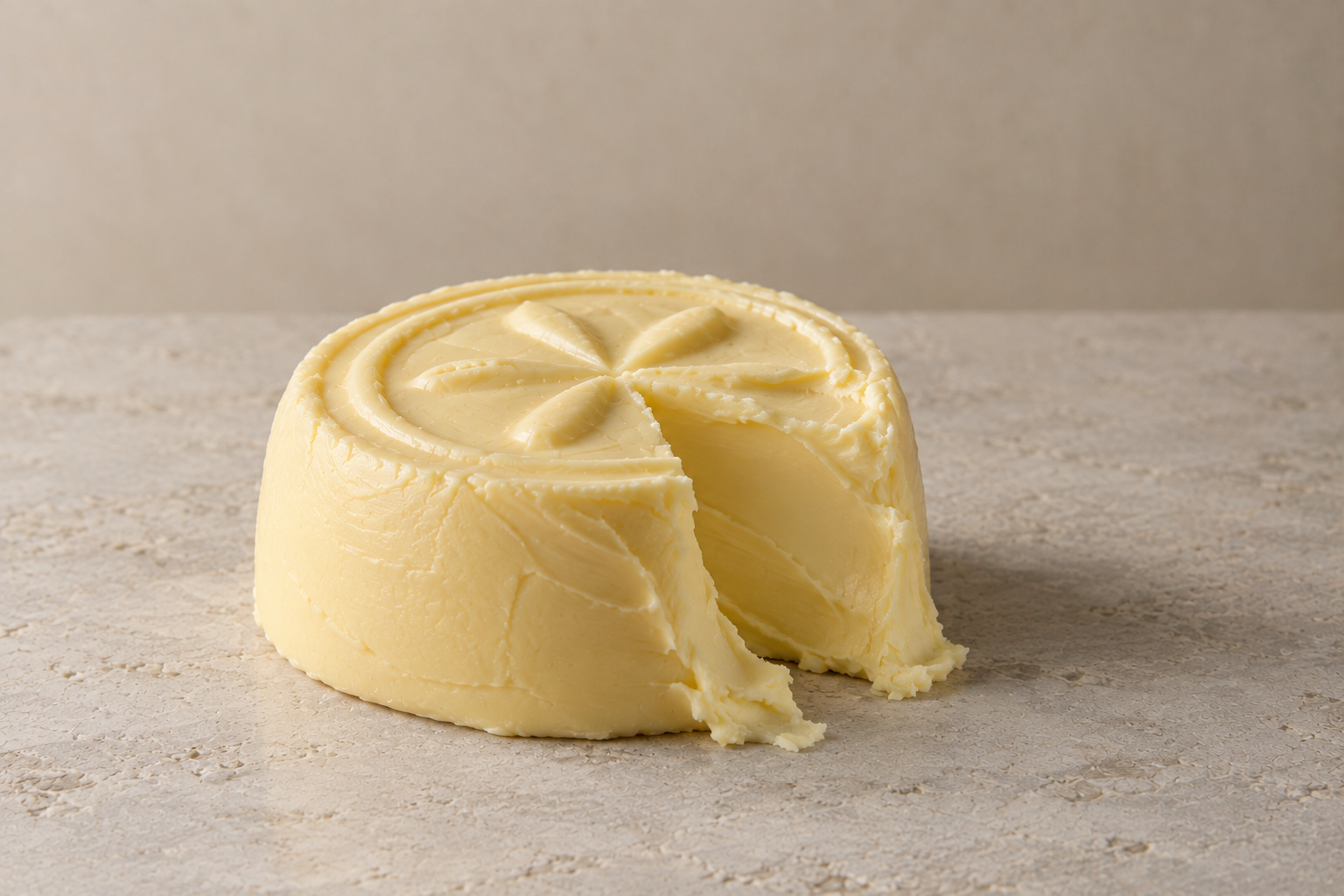
Approx. 250 g. This is how butter was made here: the cream is left to ripen with cultures before churning, which is where the acidity and the aroma come from. With flaked salt or unsalted.
Making it again is also a way of supporting the farms that take their herds up to the high pastures, because that grass is the only source of the milk we work with.
A marked lactic aroma and the acidity of the ripened cream. Firm to cut and melting in the mouth.
Toasted bread and flaked salt. In the kitchen, to finish vegetables, fish and sauces.
Before butter was made in factories, the cream was left to ripen with its own cultures for a day or more before it was churned. That wait is what gives this butter its acidity and its smell. The method had fallen out of use in these valleys, and bringing it back is part of why Bresneda exists. It is made in pieces of approx. 250 g, with flaked salt or without.
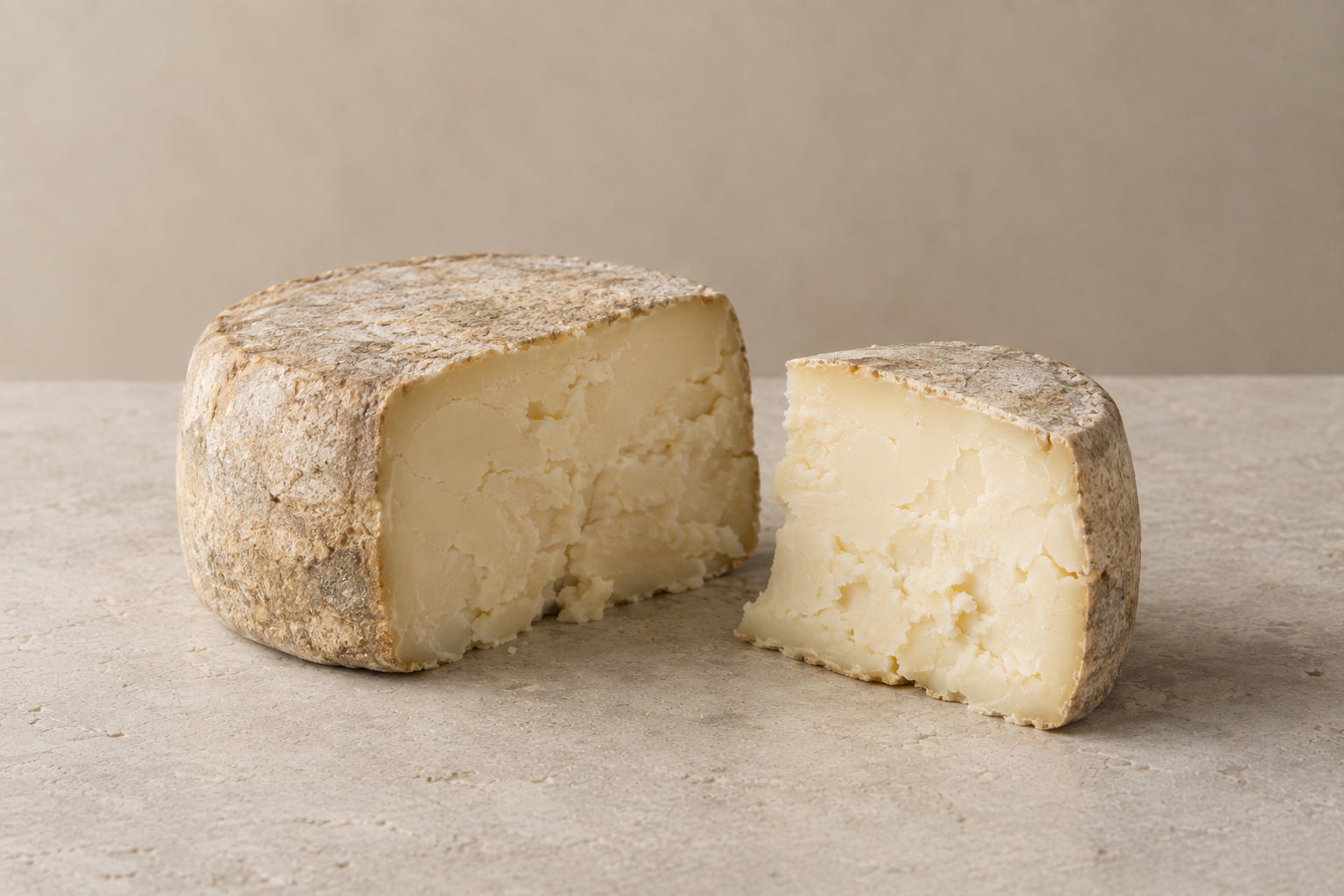

Indicación Geográfica Protegida (IGP). Close paste, a lactic edge and a finish that stays with you.
The Queso Los Beyos Indicación Geográfica Protegida (IGP) covers only Sajambre, in León, and Ponga and Amieva, in Asturias. Very few producers of Queso de los Beyos are left, and we are proud to be one of them.
The pasteurised one: a thin rough rind, a close paste that crumbles when cut, ivory in colour, mild on the nose, lightly salted and lightly acid with a fresh lactic finish. The raw milk one: a harder rind, a drier and firmer paste, longer on aroma and on taste.
Natural cider or a dry white. Country bread and quince paste.
The cheese takes its name from the Beyos gorge, which is reason enough to come and see us and drive through one of the finest stretches of northern Spain. Our Queso de los Beyos IGP comes in two versions, both from cow's milk. The pasteurised one matures for twenty days: a thin rough rind, a close paste that crumbles when cut, ivory in colour, mild on the nose, lightly salted and lightly acid with a fresh lactic finish. The raw milk one matures for sixty days: a harder rind, a drier and firmer paste, longer on aroma and on taste. They are two completely different cheeses, both traditional, and you should try both.
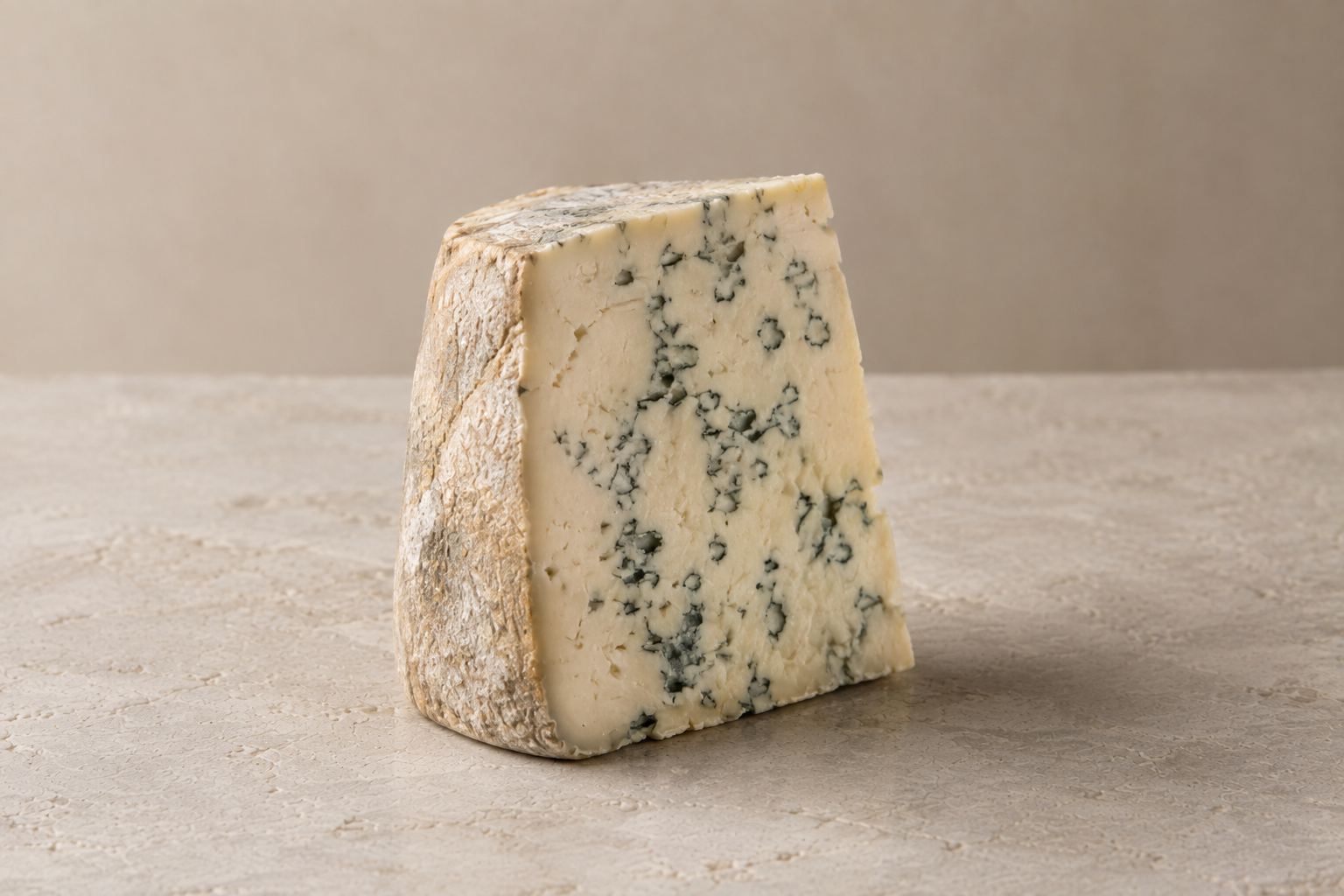
Our blue cheese, raw cow's milk and sixty days of maturing, creamy paste with fine veining.
Creamy paste with fine veining and a gentle blue. Saline, restrained piquancy and a long finish.
Natural cider, a sweet wine, walnuts and honey. Crumbled over red meat.
Named after the Puerto del Pontón, the pass that climbs out of Sajambre and the road that every animal, every churn of milk and every cheese has taken out of this valley for as long as there has been a road. It is our blue cheese.
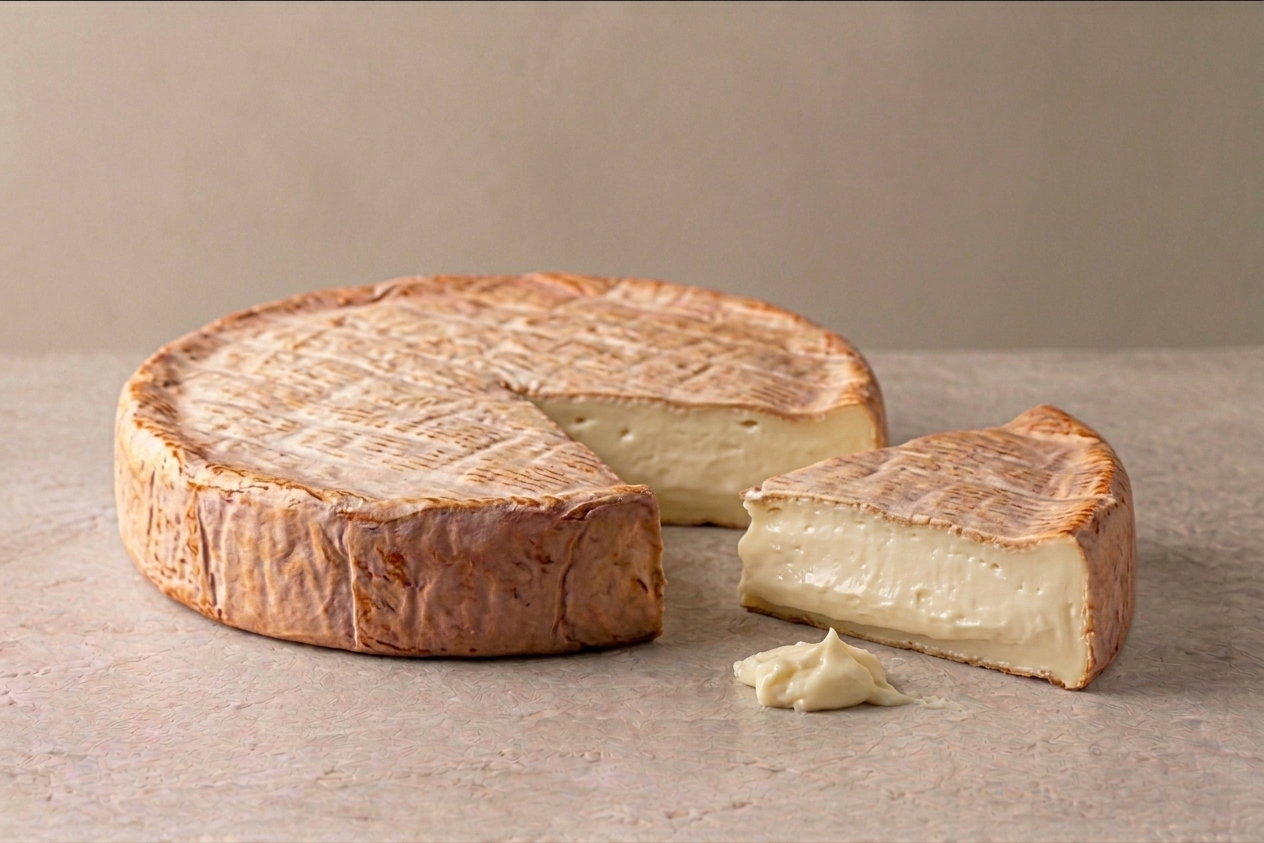
A soft cheese with a rind washed in cider, in the reblochon style.
An orange rind with a marked aroma and an unctuous paste beneath it, milder than the rind, with a memory of apple and cream.
Natural cider and country bread. Warmed, with baked apple.
Vandiel is our soft cheese with a rind washed in cider, which is where its orange colour, its aroma and the unctuous paste beneath it come from. It is natural cider, made by hand and with no added carbonation, poured from a height so that it wakes up in the glass. The cider tradition of this region is a long one and it is still alive, with its presses and its apple orchards. The cider comes from the far side of the gorge. Sajambre looks towards Asturias along the course of the Sella, and Asturian cider culture, listed by UNESCO as intangible heritage in 2024, has always arrived by that same road, the one the cattle and the cheese took on the way out. Milk from the region and Asturian apple in a single cheese, the two sides of the Picos de Europa brought together.
The cheeses are made in season, so not every one of them is available all year round.